dqpack@danqing.net
 +8618125839585


Take a look at the shelves of a supermarket or convenience store, and one packaging format appears more often than it did a few years ago—the spout pouch.
It is used for fruit juice, baby food, sauces, laundry detergent, shampoo, and even liquid pet treats. For many products, manufacturers are moving away from rigid plastic bottles and trying flexible packaging instead. The reason is fairly simple: a spout pouch can reduce material usage while making transportation and storage more efficient.
That does not mean it will replace every bottle on the market. However, for many liquid and semi-liquid products, it has become a practical alternative.
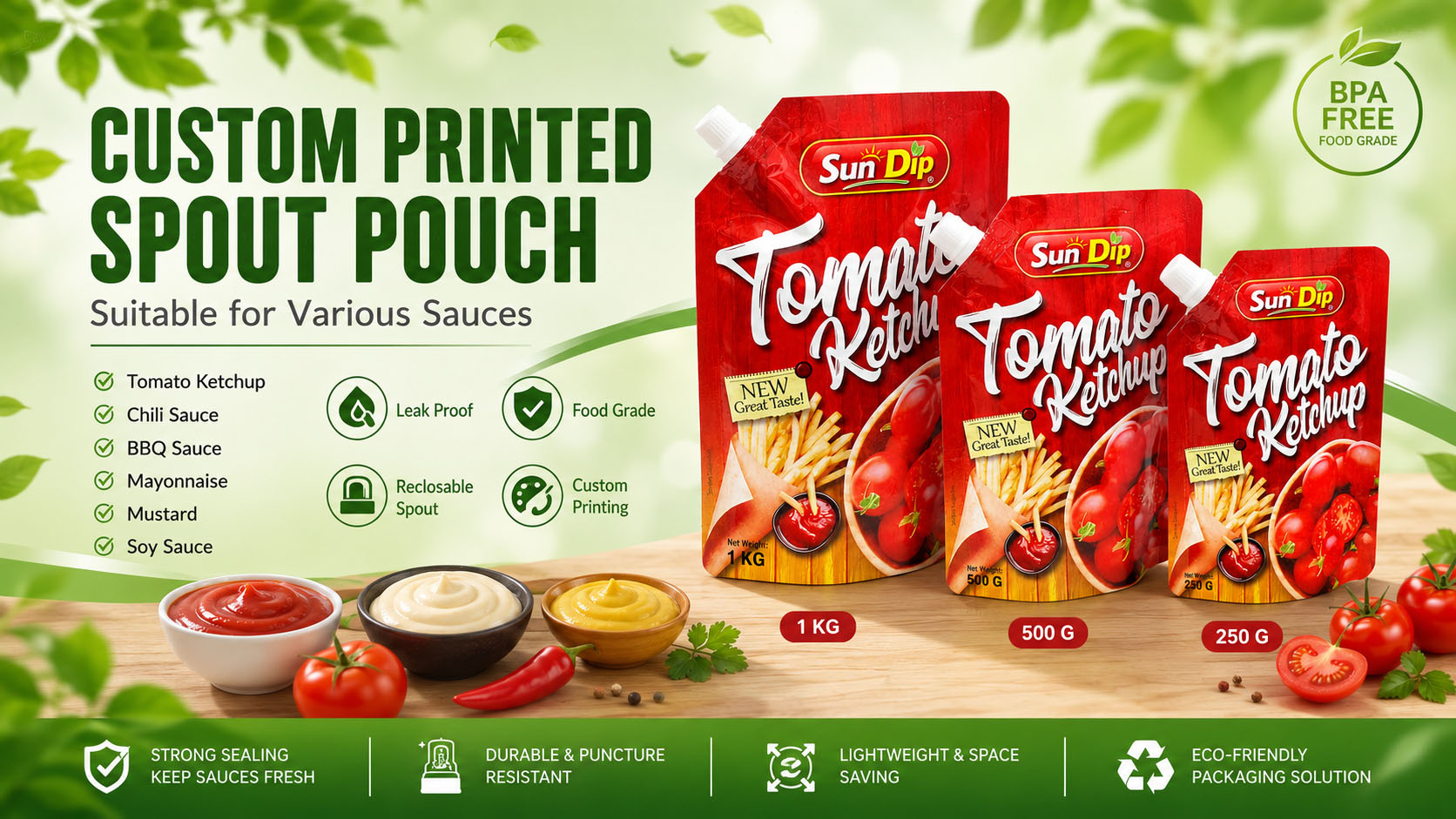
What Exactly Is a Spout Pouch?
A spout pouch is a flexible package fitted with a plastic spout and a reclosable cap. Some people also call it a stand-up pouch with spout or a spouted pouch.
The package is designed to hold products that need to be poured or squeezed out gradually. After opening, the cap can be tightened again, allowing the remaining contents to be stored for later use.
Unlike a rigid container, an empty pouch can be transported flat before filling. This is one of the reasons many manufacturers consider it for large-scale production.
How Is a Spout Pouch Made?
Although material structures vary depending on the product, most spout pouches have three basic parts.
The first is the pouch body. A bottom gusset allows the package to stand upright, making it easier to display on store shelves.
The second part is the laminated film structure. A common combination is PET, Nylon, Aluminum Foil, and PE. Each layer has a different function. PET provides a printable surface, Nylon improves strength, aluminum foil helps protect the contents from oxygen and light, and PE forms the inner sealing layer.
The third component is the spout and cap. These are heat-sealed onto the pouch and designed for repeated opening and closing.
For products with special requirements, the material structure can be adjusted to improve barrier performance or withstand different filling processes.
Why Are Spout Pouches Becoming More Popular?
One advantage is lower package weight. Compared with many rigid containers of the same volume, a flexible pouch generally uses less material. This can help reduce freight costs, especially when products are shipped over long distances.
Convenience is another factor. The spout allows consumers to pour the product more easily and helps control the amount being dispensed. Since the cap can be closed again, the package is suitable for products that are not used all at once.
Printing performance also plays a role. Flexible packaging offers a large printable area, giving brands more freedom in package design without the need for separate labels.
Many companies are also paying closer attention to packaging sustainability. Although different materials have different recycling challenges, flexible pouches typically require less plastic than comparable rigid bottles, which may help reduce overall material consumption.
Where Are Spout Pouches Used?
The application range has expanded steadily over the years.
In the food industry, spout pouches are often used for fruit puree, sauces, cooking oil, condiments, and beverages.
Home-care products such as laundry detergent, fabric softener, and dishwashing liquid are also common applications because the package is easy to carry and store.
In personal care, products like shampoo, body wash, hand sanitizer, and lotion are increasingly available in refill pouches.
The pet food industry has also adopted this packaging format for liquid snacks and nutritional supplements.
Are Spout Pouches Suitable for High-Temperature Processing?
Some products require hot filling or retort sterilization, especially ready-to-eat foods and baby food.
In these cases, the choice of material becomes particularly important. High-temperature spout pouches can be designed to tolerate sterilization conditions while maintaining package integrity. The exact structure depends on factors such as filling temperature, shelf-life requirements, and the characteristics of the product itself.
Because of these variables, packaging is usually developed around the application rather than using a single standard specification.
Spout Pouch or Plastic Bottle?
There is no single answer because different products have different packaging needs.
Rigid bottles remain a good option for some applications, particularly where shape and impact resistance are priorities. On the other hand, spout pouches offer advantages in weight, storage efficiency, and material usage.
For many brands, the decision comes down to balancing cost, logistics, product protection, and consumer convenience.
Frequently Asked Questions
What products can be packaged in a spout pouch?
Spout pouches are widely used for products such as fruit juice, sauces, baby food, cooking oil, yogurt, laundry detergent, shampoo, body wash, and liquid pet treats. The packaging structure can be customized for different product characteristics.
What materials are commonly used for spout pouches?
Many spout pouches are made from multi-layer laminated films. Common materials include PET, Nylon (NY), Aluminum Foil (AL), and Polyethylene (PE). The final material structure depends on barrier requirements, filling conditions, and the expected shelf life.
Can spout pouches be used for hot filling or retort sterilization?
Yes. Some spout pouches are designed for high-temperature applications and can be used for products that require hot filling or retort processing. The appropriate material combination should be selected according to the production process and temperature requirements.
Are spout pouches more sustainable than plastic bottles?
In many applications, spout pouches use less packaging material than rigid plastic bottles. They also require less storage space before filling, which can improve transportation efficiency. The overall environmental impact depends on the material structure and local recycling systems.
Can spout pouches be customized?
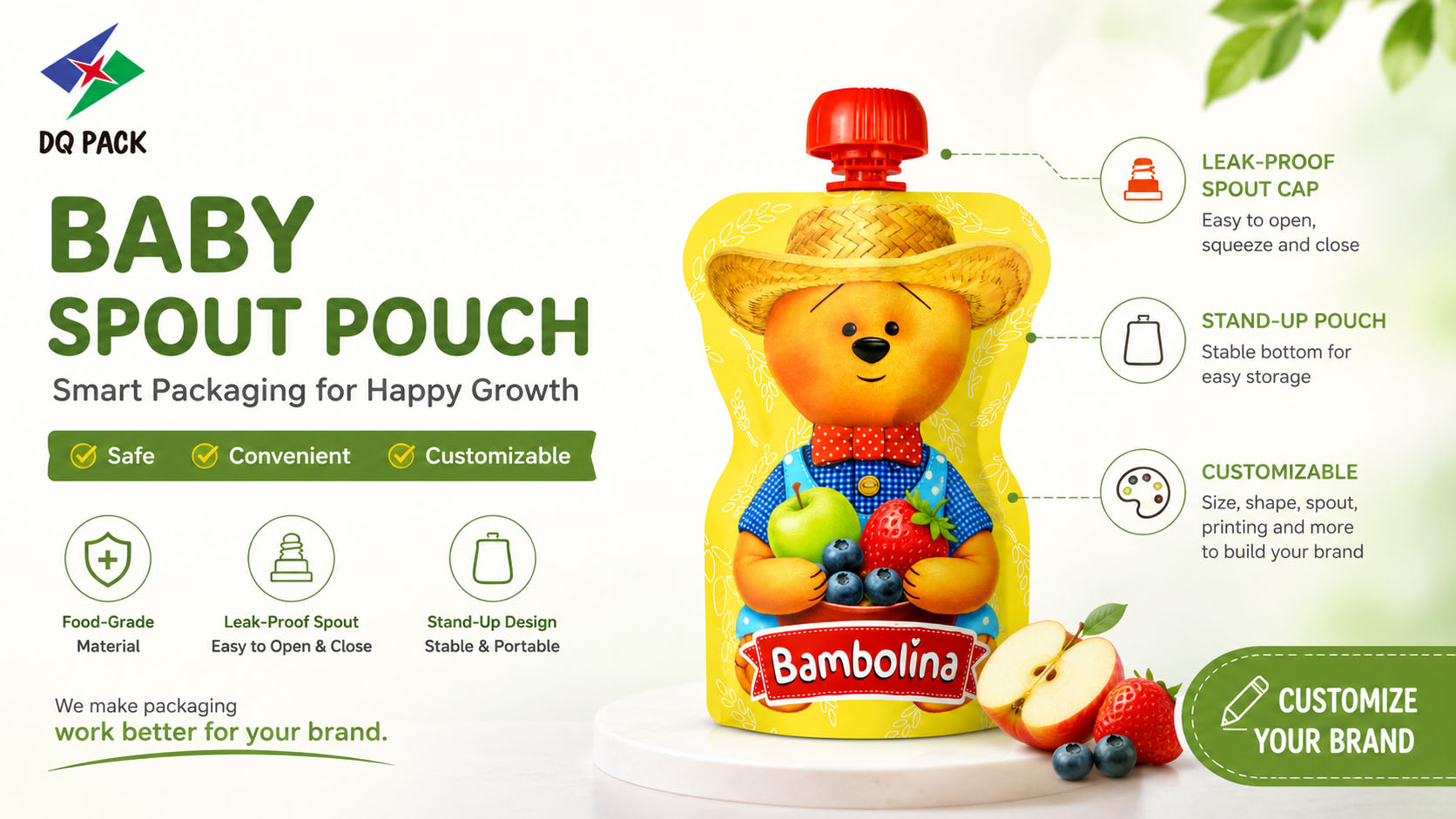
Yes. Manufacturers can customize pouch size, shape, printing design, spout position, cap type, and material structure to match different products and branding requirements.
How do I choose the right spout pouch for my product?
Several factors should be considered, including the type of product, viscosity, filling method, shelf-life target, barrier requirements, transportation conditions, and whether the package needs to withstand high-temperature processing. Working with an experienced packaging supplier can help determine the most suitable solution.
Final Thoughts
The growing use of spout pouches reflects broader changes in the packaging industry. Manufacturers are looking for ways to improve transportation efficiency, reduce material consumption, and provide consumers with packaging that is easy to use.
Choosing the right pouch structure involves more than selecting a bag and a cap. Barrier properties, filling methods, sealing performance, and end-use conditions all need to be considered during product development.
At DQ PACK, we work with customers on customized flexible packaging solutions for different industries and filling requirements, providing support from material selection and printing to pouch converting and production.
Post time: Jun-09-2026