dqpack@danqing.net
 +8618125839585


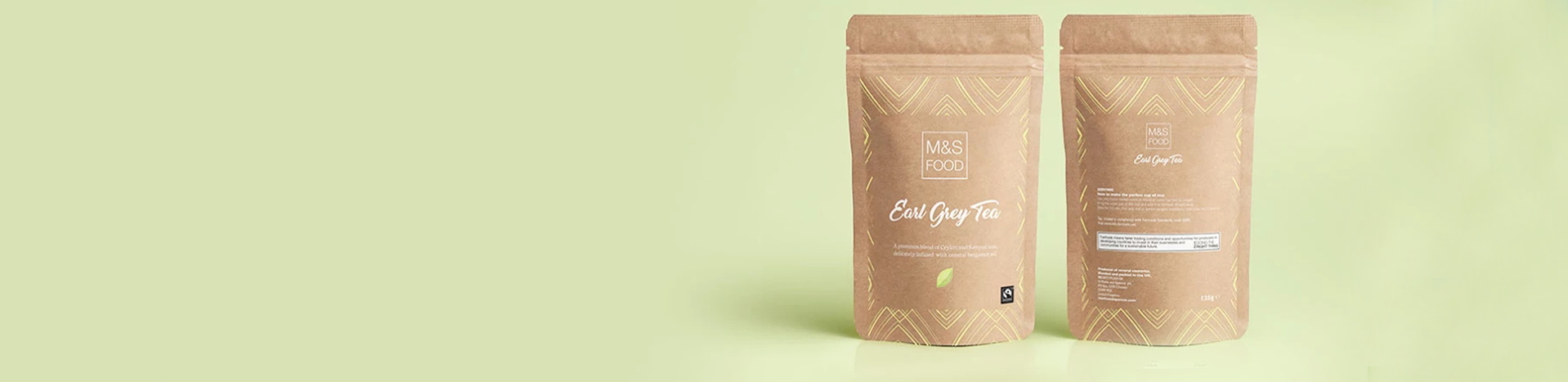
What is a customized Doypack?
The basic structure of Doypack is a three-sided sealed flexible bag with a W-shaped bottom gusset. When empty, it is almost flat, and upon filling, the bottom gusset unfolds into an oval base, allowing the bag to stand upright. This design combines the transportation efficiency of flat bags with the shelf-display capability of rigid containers.
The differences between customized Doypack and standard stock bags are reflected in several aspects: dimensions are determined based on product volume rather than approximate specifications; material structures are proportioned according to barrier requirements; the printing surface carries brand information; functional accessories (zippers, spouts, valves) are selected based on usage scenarios. Common applications include pet food, coffee beans, snacks, dried fruits, candies, powdered products, and other categories.
Which parts of Doypack can be customized?
1.Bag dimensions and capacity
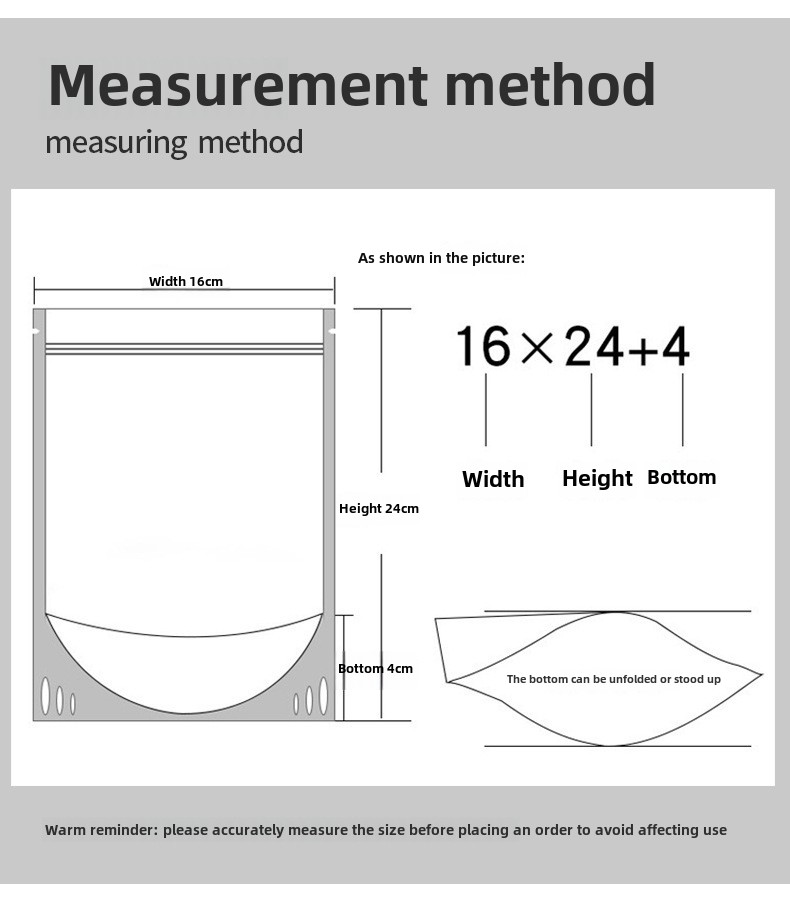
Dimensions are marked in the format of width × height + bottom, with units in millimeters. For example, 140 × 210 + 80 mm indicates a bag width of 140mm, bag height of 210mm, and hem of 80mm (approximately 40mm on the inner side after folding).
The key to determining capacity is volume, not weight. The volume of 250g of coffee beans is much larger than that of 250g of sugar. Relying solely on weight to select dimensions from a table can easily lead to underfilled or improperly sealed bags. During actual selection, the product’s bulk density or the actual volume after filling should be provided, and the supplier will recommend a suitable size range. DQ PACK’s Doypack capacity covers solids from 20g to 10kg and liquids from 30ml to 10L, with specifics determined by bag type and material structure.
2. Packaging Materials and Barrier Properties
Common structures are arranged in order of increasing barrier levels:
PET/PE: Moderate oxygen and moisture barrier, suitable for short-shelf-life snacks and candies
PET/VMPET/PE: The aluminum coating enhances barrier properties, with costs lower than aluminum foil, making it suitable for most dry food applications
PET/AL/PE: The aluminum foil layer provides high oxygen and moisture resistance, as well as light blocking, suitable for coffee and long-shelf-life products
The material selection logic starts from product sensitivity: products prone to oxidation (such as coffee and nuts) require aluminum foil or high-barrier aluminum-coated materials; those susceptible to moisture (like dried fruits and powders) focus on moisture-proof layers; items containing oils or sharp contents necessitate attention to inner-layer puncture resistance and oil resistance. For non-food applications (e.g., cosmetics and detergents), emphasis is placed on moisture-proofing and chemical compatibility, without necessarily requiring food-grade high-barrier structures.

3. Printing and Surface Effects
Flexographic printing is suitable for large-volume orders, offering high color saturation and excellent batch consistency; digital printing is ideal for small batches or multi-version testing. DQ PACK’s flexo printing can achieve up to 13 colors. Surface treatments include options such as gloss, matte, partial UV, and hot stamping effects, with matte providing a more premium texture and gloss enhancing color vibrancy.
During design, ensure that key text or logos are not placed in the bottom pleat folding area, and maintain a safety margin in the edge sealing zone to prevent obstruction or truncation of information after bag production.
4. Zipper and Reusable Seal
The zipper is the most common functional accessory for Doypack, suitable for products requiring multiple access (pet treats, nuts, coffee beans). The zipper position must align with the bag width and filling line: placing it too close to the bag opening increases the risk of contamination during filling, while positioning it too low reduces effective capacity. Some products may also opt for a child safety zipper design for scenarios requiring protection against accidental ingestion.
5. Windows and Tear Strips
The transparent window is used to display the appearance of the contents, suitable for products where the color or shape itself serves as a selling point (such as dried fruits, candies, and pet snacks). The window shape can be a regular rectangle, circle, or irregular shape, but additional die-cutting processes are required during the composite and bag-making stages, which may affect the minimum order quantity and delivery time. A tear notch is a small cut made on the edge of the bag to guide consumers in tearing it straight, which is particularly important for bags without zippers.
6. Suction nozzles, handles, and other accessories
The spout with a twist-off cap is suitable for liquid, sauce, and fruit puree products, allowing consumers to directly squeeze out the contents. The handle or hanging hole facilitates carrying or retail display for large-sized packaging. The rounded corner design minimizes the risk of puncturing the outer carton at the bag corners.
It must be clarified that not all accessories can be freely combined. The spout pouch requires specific bag structure and welding processes, which differ from the production process of the zipper bag. While hanging holes and rounded corners can coexist, the combination of a suction and zipper on the same bag requires separate evaluation of sealing reliability. Before placing an order, the supported accessory range of the selected bag type should be confirmed.
| Product type | Recommended customization options | Key points of selection |
| Coffee bean | Aluminum foil structure, one-way exhaust valve, zipper | Oxygen barrier + exhaust, the position of the valve should avoid the filling line |
| Pet treat | Zipper, puncture-resistant structure, matte printing | Moisture-proof and resistant to repeated opening and closing, with an inner layer that is oil-resistant |
| Dried fruits/snacks |
Transparent window, zipper, easy-tear opening |
The display effect and sealing performance are balanced |
| Liquid/Sauce | Suction nozzle + screw cap, high-barrier inner layer | The welding strength of the suction nozzle and its compatibility with sterilization/filling |
What information is required to order custom Doypack?
Preparing the following information before placing an order can significantly shorten the communication and sampling cycle:
Product type and net content: What to pack, how many grams or milliliters to pack
Bag size and bag type: provide existing sizes directly; If not available, the supplier will recommend based on the product volume
Material structure and barrier requirements: target shelf life, whether light avoidance/grease resistance/puncture resistance is required
Printing design files: in AI, PDF, or PSD format, with specified spot colors and surface effect requirements
Functional accessories: zipper, suction nozzle, valve, window, hanging hole, etc
Expected purchase quantity: affects printing method and unit price
Sample confirmation requirements: Is it necessary to fill and test with actual products
Why choose a custom Doypack manufacturer?
The ability to customize material structures is the primary consideration. Being able to adjust the ratio of AL, VMPET, NY and other layers according to the product, rather than just selling fixed structures to suppliers, provides more room for adjustment when solving shelf life or damage issues. The full process control of printing, lamination, and bag making is equally crucial: the lamination strength determines whether the bag will layer, and the bag making accuracy determines the consistency of the zipper and sealing position.
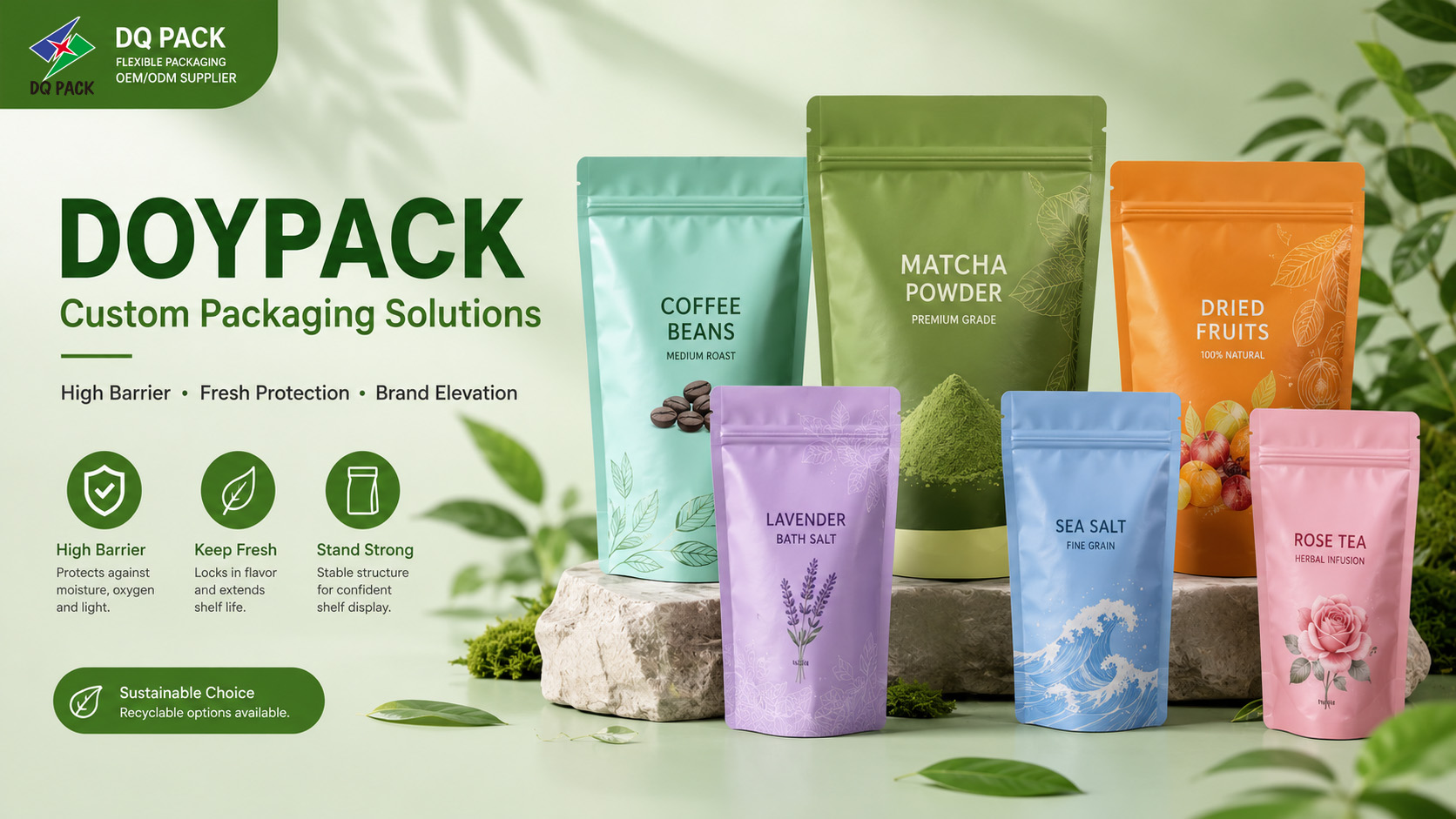
DQ PACK was established in 1991 and has the full production capacity of gravure printing, lamination, slitting, and bag making. It can customize Doypack’s material structure, size, printing, and functional accessories, covering pet food, coffee, snacks, dried fruits, and other categories. The sampling and mass production cycle is confirmed based on the bag type and quantity, with a regular lead time of 15-20 days. More specifications and customization options can be found on the Doypack product category page: DQ PACK Stand Up Pouch/Doypack.
When selecting a custom Doypack supplier, it is recommended to first obtain samples, fill and seal them with actual products, and then decide whether to enter bulk production. A supplier who is willing to cooperate with filling testing and adjust the plan based on the test results is more worthy of long-term cooperation than a supplier who only quotes price and delivery time
Post time: Oct-27-2026