dqpack@danqing.net
 +8618125839585


1. What Is Flexible Packaging?
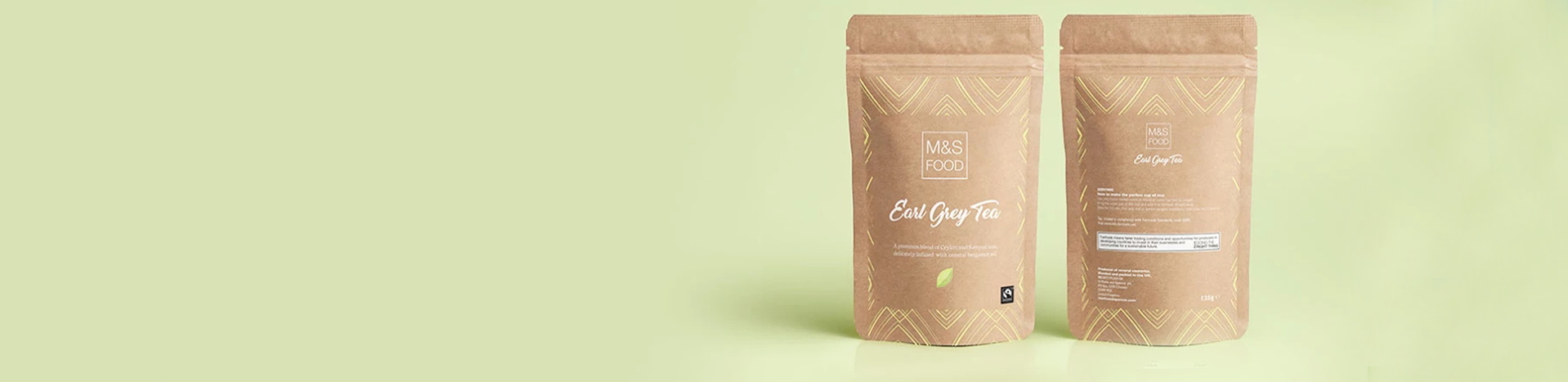
Flexible packaging refers to packaging made from plastic film, aluminum foil, paper, or multilayer composite materials. Common products include stand-up pouches, spout pouches, zipper pouches, gusseted pouches, retort pouches, and continuous packaging film.
Compared to traditional glass bottles, metal cans, and rigid plastic containers, flexible packaging is lightweight, structurally flexible, and easy to transport and store. Through the use of composite materials, it can also provide functions such as moisture resistance, oxygen barrier properties, light protection, puncture resistance, and heat-sealability, making it widely used in the food, beverage, pet food, and personal care industries.
Flexible Packaging vs. Rigid Packaging
Comparison Criteria Flexible Packaging Rigid Packaging
Materials Plastic film, aluminum foil, composite materials Glass, metal, rigid plastic
Structure Flexible, shape-changeable Fixed shape Weight Typically lighter Typically heavier
Storage Empty bags can be laid flat or rolled Typically requires dedicated space
Product Forms Stand-up pouches, spout pouches, roll film Bottles, cans, glass jars
Laminated flexible packaging combines the properties of different materials to provide the packaging with functions such as printing, barrier protection, heat sealing, and mechanical protection. For example, PET can serve as the outer printing layer, VMPET or AL provides barrier properties, and PE is primarily used for heat sealing.
Therefore, flexible packaging materials are not simply layered on top of one another but must be carefully designed based on product characteristics, shelf life, and processing conditions.
2. Main Types of Flexible Packaging
Flexible packaging comes in a variety of bag styles and processing methods. Different bag styles vary in terms of presentation, capacity, sealing structure, and suitability for filling.


2.1 Stand-Up Pouches
Stand-up pouches stand on their own thanks to a bottom gusset structure, making them ideal for shelf display and a wide range of food packaging applications.
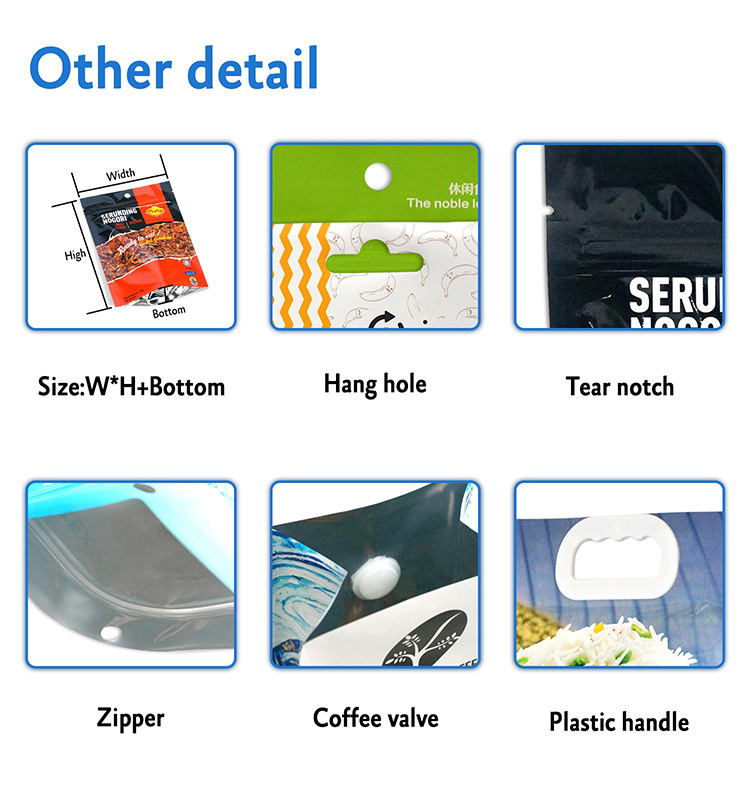
- Features: Can be configured with zippers, transparent windows, tear-open tabs, and various surface finishes.
- Applications: Nuts, dried fruits, coffee, potato chips, and pet treats.
- Customization: Materials, dimensions, capacity, printing, and zipper design.
2.2 Spout Pouches
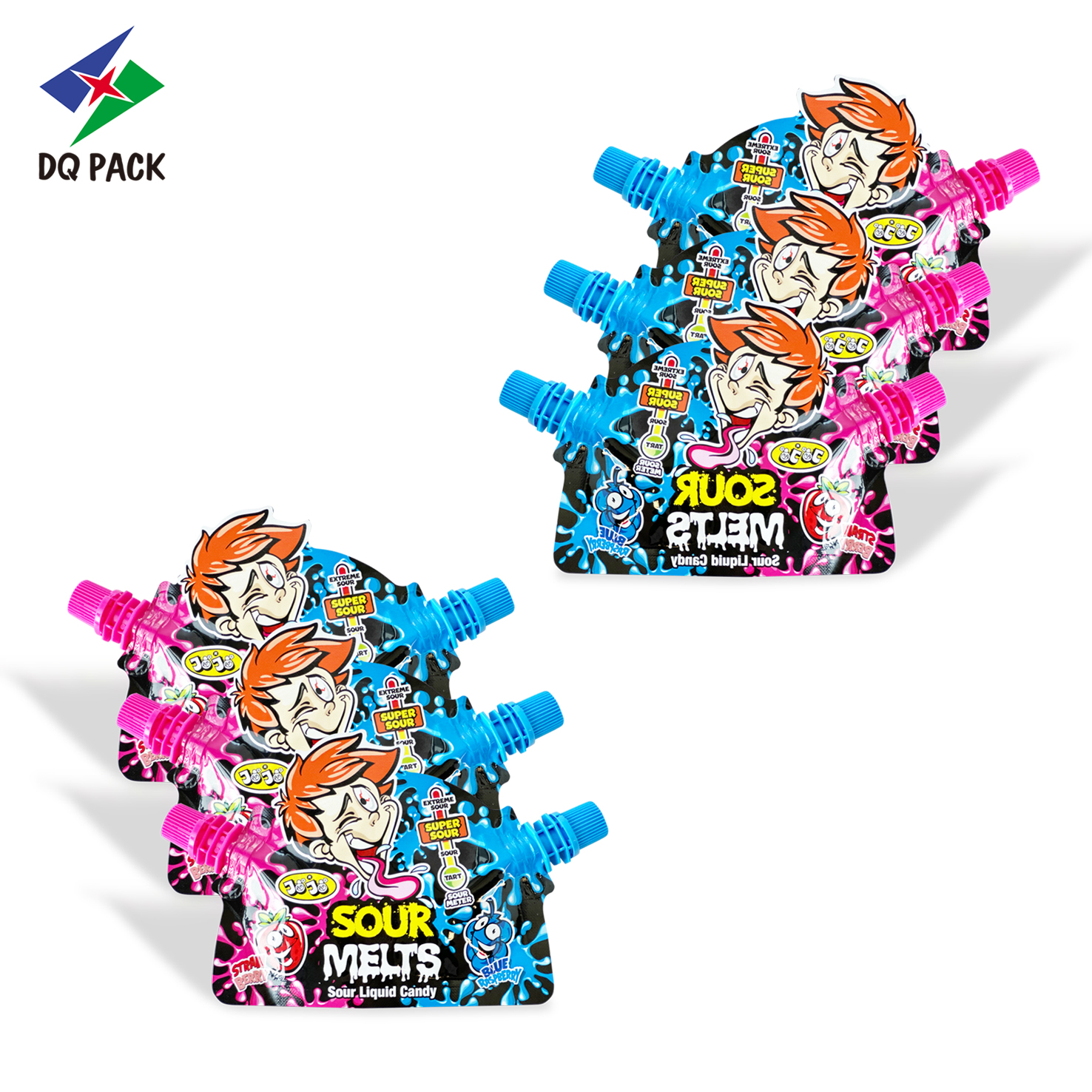
Spout pouches consist of a flexible pouch body, a spout, and a cap. They are suitable for liquid and semi-liquid products, and the contents can be dispensed by squeezing or pouring.
- Features: Supports various spout diameters, cap designs, and spout positions.
- Applications: Fruit purees, fruit juices, yogurt, sauces, laundry detergent, and refill packs.
- Customization: Pouch capacity, spout specifications, cap color, materials, and printing.
2.3 Flat-Bottom Pouches
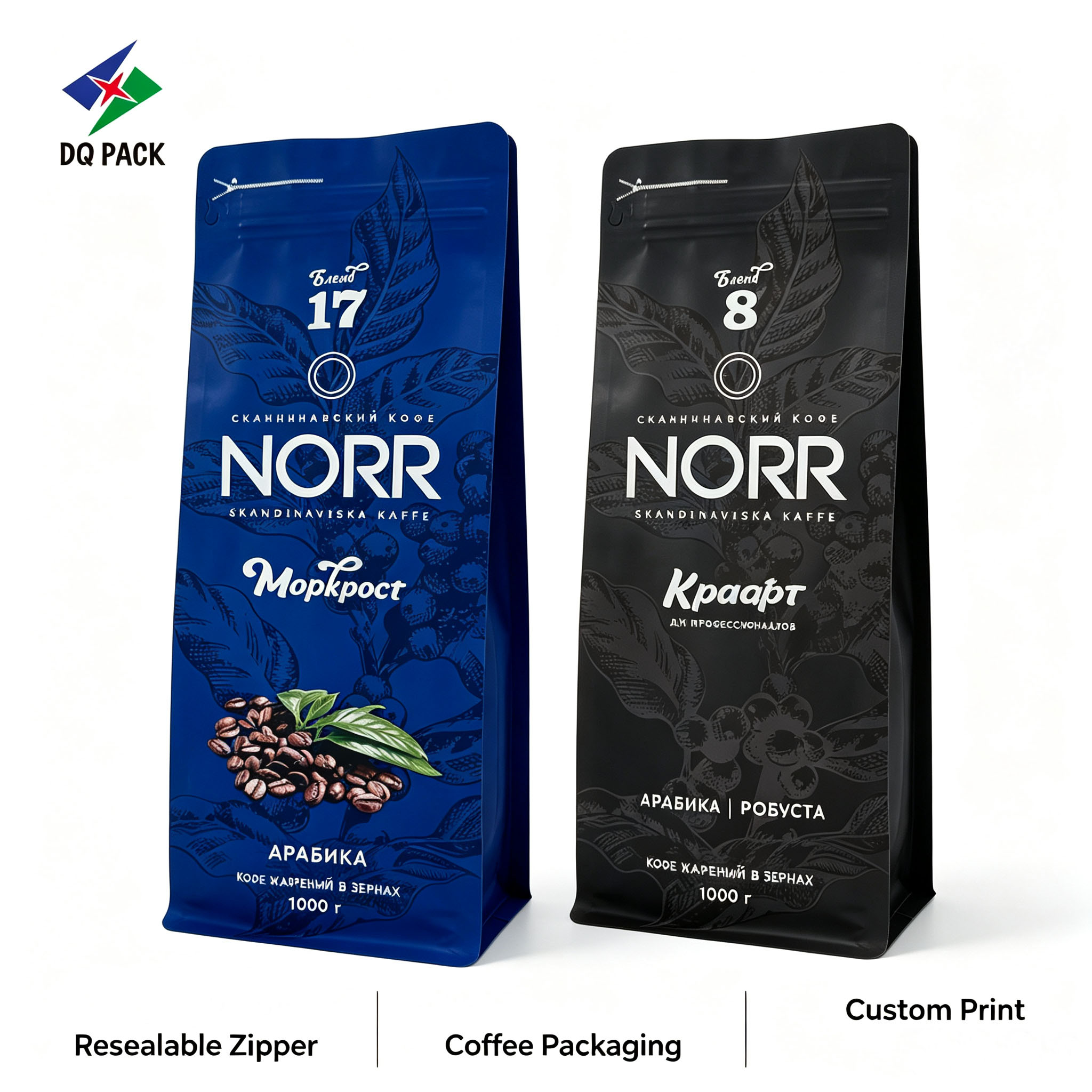
Flat-bottom pouches feature a flat base and multi-sided sealing design, offering good stand-up stability and display space.
- Features: Can be configured with zippers, air vents, and various side panel structures.
- Applications: Coffee beans, pet food, nuts, and large-volume snacks.
- Customization: Pouch dimensions, bottom width, materials, and functional accessories.
2.4 Flat Pouches
Flat pouches typically feature a three-side or four-side seal structure and are suitable for small-volume, single-use, and pre-portioned packaging.
- Features: Simple structure, suitable for a variety of automated packaging needs.
- Applications: Seasonings, sauces, powders, tea bags, and sample packs.
- Customization: Dimensions, materials, sealing edges, and tear-open tabs.
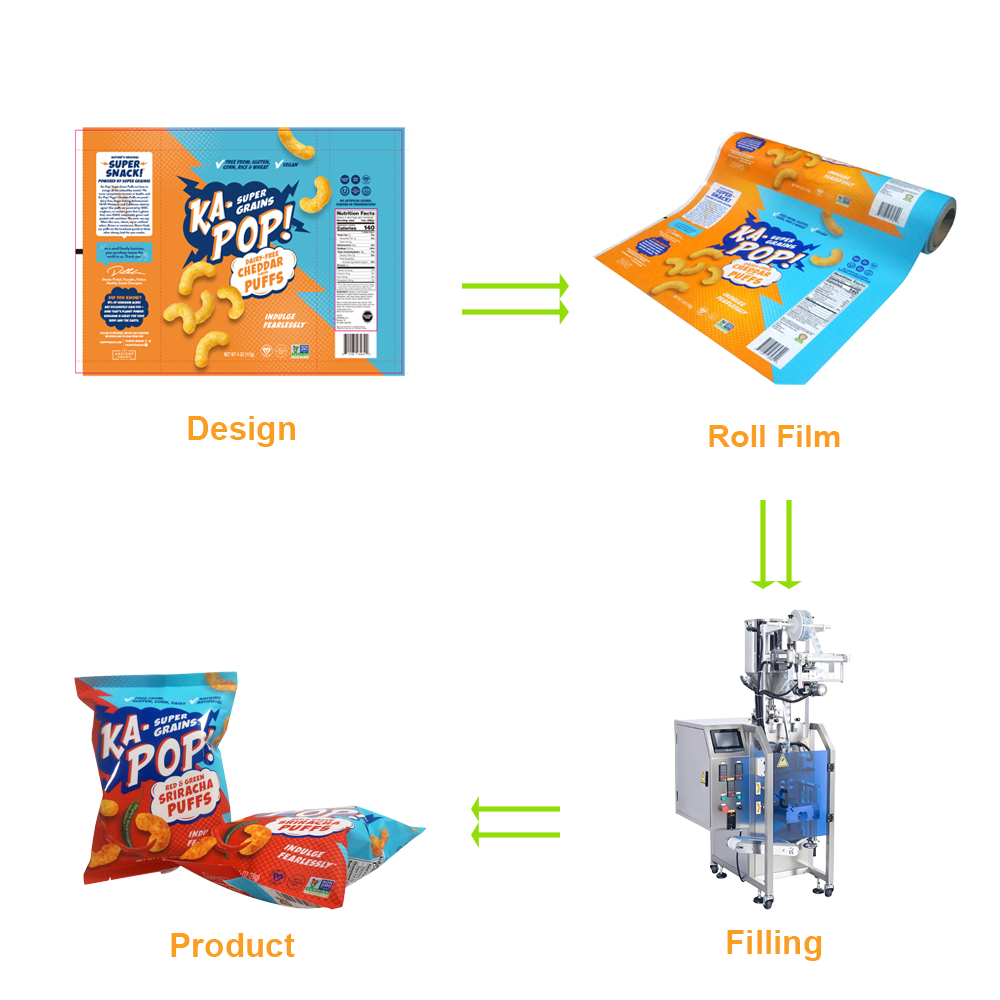
2.5 Packaging Roll Film
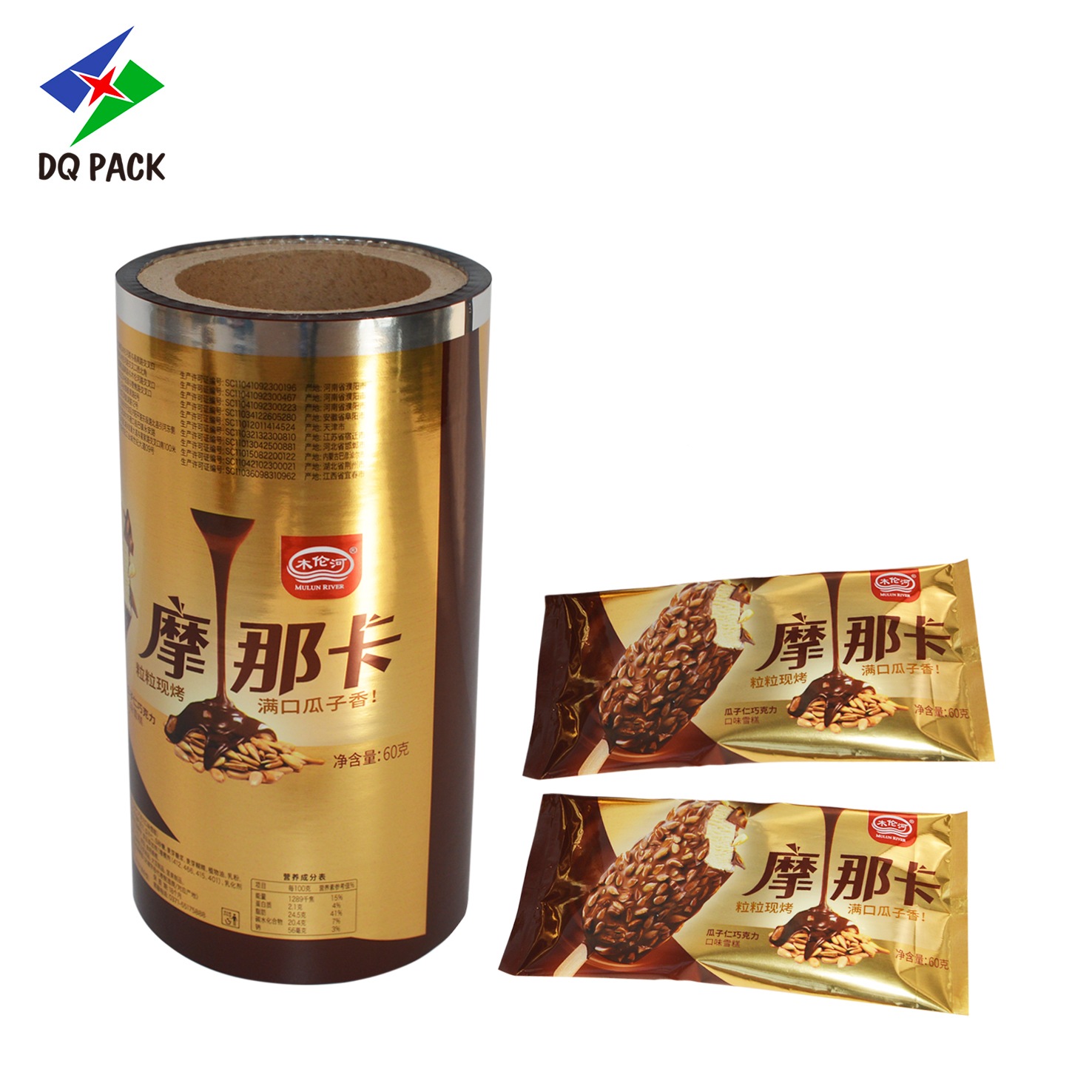
Packaging roll film is a continuous roll of laminated film used in automated packaging equipment for bag forming, filling, and sealing.
- Features: Film width, roll diameter, and heat-seal performance can be customized according to equipment requirements.
- Applications: Tea, coffee, snacks, pet food, and personal care products.
- Customization: Material structure, printed patterns, winding direction, and specifications.
2.6 Retort Pouches
Retort pouches are made from composite materials suitable for high-temperature sterilization processing and are primarily used for products requiring retort or commercial sterilization.
- Features: High-temperature-resistant structures selected based on sterilization temperature, time, and pressure.
- Applications: Ready-to-eat foods, wet pet food, meat products, and sauces.
- Customization: Pouch style, material, dimensions, and retort performance.
3. Flexible Packaging Materials and Lamination Structures
Material selection is a critical aspect of flexible packaging design. Different materials possess varying mechanical strengths, barrier properties, and heat-sealing properties; they are typically combined through lamination processes to meet product packaging requirements.
3.1 Common Flexible Packaging Materials
| Material | Key Properties | Common Applications |
| PET | High strength, good printability | Outer printed film |
| PE | Flexible, good heat-sealing properties | Inner packaging layer |
| BOPP | Rigidity and moisture resistance | Snack packaging |
| VMPET | Light-blocking and barrier properties | Nuts, potato chips |
| AL | Light, oxygen, and moisture barrier | High-barrier food packaging |
| NY | Puncture resistance, good mechanical strengt | Liquid and retort packaging |
3.2 Common Laminated Packaging Structures
|
Material Structure |
Key Features |
Typical Applications |
| PET/PE | Combination of printability and heat-sealability | General food packaging |
| PET/VMPET/PE | Light-blocking and barrier properties | Snacks, dried goods |
| PET/AL/PE | High barrier properties | Foods sensitive to light and oxygen |
| PET/NY/PE | Good puncture resistance | Liquids and products requiring mechanical protection |
| PET/AL/RCPP | Suitable for high-temperature retort processing | Retort-processed foods |
It is important to note that material structures are not fixed templates. Actual selection must take into account product characteristics, shelf life, filling temperature, sterilization conditions, and packaging equipment.
For example, the material requirements for standard snack packaging are completely different from those for high-temperature retort-processed foods. Before finalizing the packaging structure, purchasers should confirm the suitability of the materials with the manufacturer and conduct the necessary sealing and performance tests.
4. Flexible Packaging Applications Across Different Industries
Flexible packaging is widely used in the food, beverage, pet food, personal care, and agricultural sectors. Different products have varying requirements for material barrier properties, packaging structure, and sealing performance.
|
Industry
|
Common Packaging Formats
|
Key Packaging Requirements
|
| Food & Snacks |
Stand-up pouches, zipper pouches, flat pouches
|
Moisture resistance, oxygen barrier, sealing
|
| Beverage |
Spout pouches, roll film
|
Leak-proof, filling compatibility
|
| Baby Food |
Spout pouches |
Food contact safety, seal integrity
|
| Pet Food |
Retort pouches, stand-up pouches, eight-side-sealed pouches
|
Barrier properties, puncture resistance, seal integrity
|
| Personal Care |
Spout pouches, refill pouches
|
Seal integrity, material compatibility
|
| Agriculture |
Laminated bags, roll film
|
Moisture resistance, product protection
|
Among these, pet food and liquid packaging place relatively higher technical demands on flexible packaging manufacturers.
For example, wet pet food requires consideration of high-temperature retorting, seal strength, and puncture resistance; while spout pouches for fruit purees and yogurt require attention to the heat-seal compatibility between the spout and the pouch body, as well as cap design and safety in use.
Therefore, packaging solutions should be designed based on the end product’s processing methods and usage environment, rather than simply selecting materials based on pouch type.


5. What Can Be Customized in Flexible Packaging?
For B2B buyers, customizing flexible packaging involves more than just selecting a bag style; it also encompasses materials, dimensions, printing, and functional accessories.
Common customization options include:
|
Customization Options |
Details |
| Material Structure |
PET/PE, PET/VMPET/PE, PET/AL/PE, etc. |
| Pouch Styles |
Stand-up pouches, spout pouches, eight-side-sealed pouches, three-side-sealed pouches, retort pouches |
| Size & Capacity |
Determined based on product weight, volume, and filling method |
| Printing |
Rotogravure printing, digital printing, custom designs |
| Functional Features |
Zippers, spouts, carry holes, tear-open tabs, vent valves |
| Surface Finishing |
Matte, glossy, and special spot effects |
Before placing a customization order, buyers are advised to prepare basic information such as net product weight, pouch dimensions, material requirements, print files, and filling methods.
For projects where the material structure has not yet been determined, buyers may first provide product samples or product information so that the manufacturer can assist with the evaluation.


6. How to Choose the Right Flexible Packaging Manufacturer?
When selecting a flexible packaging supplier, buyers should not only compare quotes but also evaluate the factory’s production capacity, material expertise, quality control, and delivery capabilities.
It is recommended to focus on verifying the following six areas:
|
Evaluation Criteria |
What Buyers Need to Confirm |
| Manufacturing |
Does the facility have production processes such as printing, lamination, and bag making? |
| Material Expertise |
Can the supplier recommend material structures based on product requirements? |
| Quality Control |
Do they test seal strength, leakage, and lamination performance? |
| Certifications |
Do they hold relevant quality management system certifications and food contact compliance documentation? |
| Customization |
Do they support customization of bag styles, sizes, printing, and functional accessories? |
| Production Capacity |
Can they meet order quantities and delivery schedules? |
Why Choose a Manufacturer with Comprehensive Production Capabilities?
Flexible packaging production involves multiple process steps, including printing, lamination, slitting, and bag making. Spouted pouches also involve spout installation and heat sealing.
If a manufacturer has in-house production lines and supporting processing capabilities, it can more directly coordinate compatibility issues between materials, pouches, and accessories.
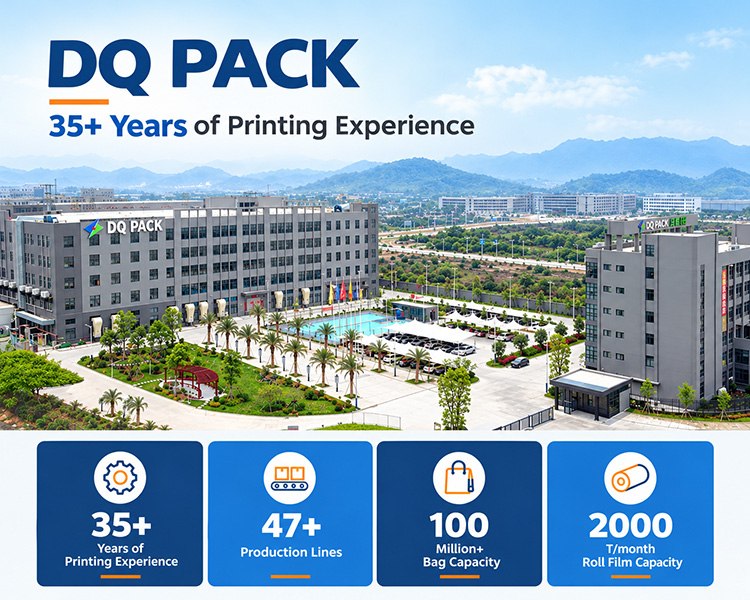
Take DQ PACK as an example: we are a manufacturer with over 30 years of experience in flexible packaging production, and our products are exported to more than 140 countries and regions.
Our customization capabilities include:
- Printing & Lamination: Custom printing and multilayer lamination production.
- Bag Making: Production of stand-up pouches, gusseted pouches, retort pouches, and other bag styles.
- Spout Sealing: Production of spouted pouches and spout heat sealing.
- Spout & Cap Injection Molding: In-house injection molding of spouts and caps to ensure precise control over component specifications and compatibility.
- Quality Inspection: Quality checks on materials, printing, lamination, and finished products.
DQ PACK’s standard production cycle is approximately 20–25 days; specific delivery times are determined based on order quantity, materials, processes, and production schedules.
For overseas buyers, we recommend finalizing sample approval, confirming material specifications, and conducting necessary packaging performance tests prior to mass production.

7. Frequently Asked Questions
Q1: What is the difference between flexible and rigid packaging?
Flexible packaging uses flexible films or composite materials and can change shape; rigid packaging typically uses glass, metal, or hard plastics and has a fixed shape.
Q2: What materials are used in laminated plastic bags?
Common materials include PET, PE, BOPP, VMPET, AL, and NY. Different materials can be combined through a lamination process to provide barrier properties, heat-sealability, and mechanical protection.
Q3: Are laminated plastic bags suitable for food packaging?
Yes. Laminated flexible packaging that meets the food contact requirements of the target market can be used for food packaging; specific materials should be selected based on the product and processing conditions.
Q4: What is the best flexible packaging for snacks?
Common options include stand-up pouches, zipper pouches, and octagonal-seal pouches. The choice of materials depends on the product’s moisture content, shelf life, and barrier requirements.
Q5: How long does it take to produce custom flexible packaging?
The production lead time depends on the materials, pouch style, printing, and order quantity. DQ PACK’s standard production lead time is approximately 20–25 days, subject to order confirmation and production scheduling.
Conclusion: Finding the Right Custom Flexible Packaging Solution for Your Product
Selecting flexible packaging requires a comprehensive evaluation of material composition, bag style, product characteristics, filling processes, and shipping conditions. The right packaging solution not only protects the product but also meets requirements for production efficiency, cost, and end-user needs.
DQ PACK specializes in custom flexible packaging manufacturing, offering stand-up pouches, spout pouches, octagonal-seal pouches, retort pouches, and automatic packaging film rolls for industries such as food, beverages, pet food, and personal care.
From material selection and printing/lamination to bag manufacturing and spout sealing, we provide OEM & ODM packaging solutions for international brands, importers, and wholesale buyers.
Get Free Packaging Samples | Request a Custom Packaging Solution
Post time: Nov-03-2026